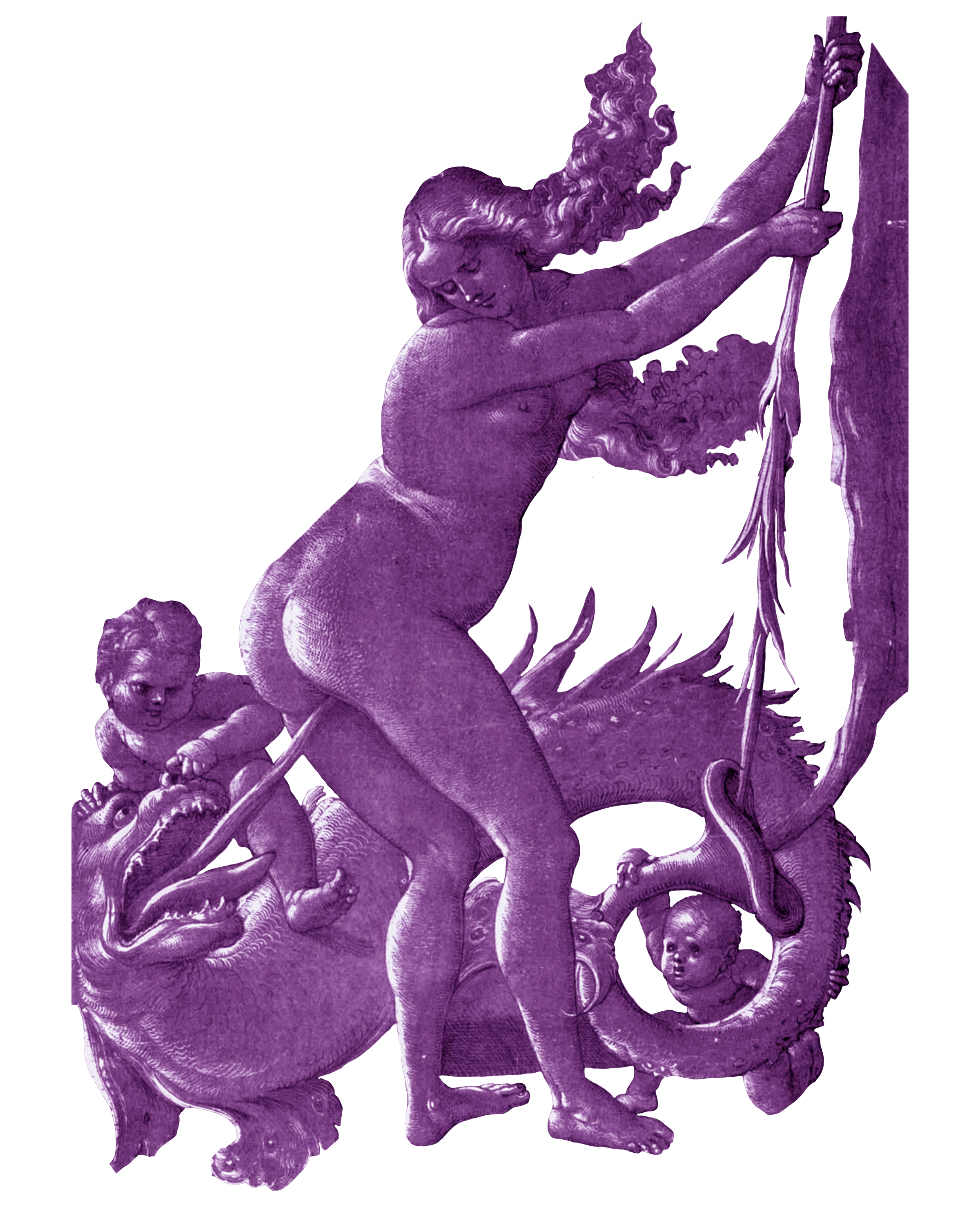
Part 2 Content Warning: this essay contains descriptions and discussions of assault and rape. [The presiding devil] might make love to her and have carnal knowledge of her: to whom he said maliciously that he would lay her down on the ground supporting herself on her two hands and feet, and that he could not have intercourse with her in any other positions; and that was the way the presiding devil enjoyed her, because at the first sensation by the neophyte of the member of the the presiding devil, very often it appeared cold and soft, as very frequently the whole body. –Quellen tract (1460) describing Arras witches and Sabbat Previously, I briefly discussed the context in which demon copulation occurred as well as traced the approximate timeline alongside the fervency of witchcraft theory in Europe during the Middle Ages. If you missed that blog post, you can read it here. Now, however, in part two the study is going to focus on the specificities of the accused’s confessions. In this blog post, I’m going to be looking at how the physical bodies of the demons and devils were described, including their genitalia, as well as how sex was described. Prior to 1570 There is a consistency to demon’s and devil’s physical descriptions by the accused that can be broken down into four categories: anthropomorphic, impossibly beautiful human, human with inhuman feet, and monstrous. The descriptor consistency can probably be attributed to the fact that interrogators relied upon scripted questions to bully or torture victims into confessing whatever aligned with and bolstered their vision for corporeal interactions.1 Because witchcraft theory, and thus demon copulation and the way it was portrayed, encountered a shift around 1570 due to a second wind of an even more fervent push against skepticism, the physical descriptions of demons and devils reflects this shift as well. Prior to 1520, and as early as the 1100s, demons were described as handsome and overtly beautiful. Merlin’s mother testifies to this in Geoffrey of Monmouth’s The History of the Kings of Britain in which she describes the mysterious incubus who visited Conception of Merlin, Bibliothèque Mazarine, Inc. 1286 her routinely in her chamber at night as “someone resembling a handsome young man” who “often made love [to her] in the form of a man”.2 It’s crucial to note here that Merlin’s mother does not state that she was visited by a man but rather something that resembled a man, indicating that she knew it was not human despite its beautiful disguise. Devil Seducing Witch, Konstanz ([1489?]) The 1523 theatrical book, Strix, sive de ludificatione daemonum or The Witch; or, On the Illusions of Demons, written by Gianfrancesco Pico della Mirandola, was based off of a witch trial that Pico had participated in. In the book, Strix, an accused witch, is being questioned and interrogated about her sexual encounter with a demon by three men. She tells the men that her demon lover, Ludovicus, had appeared in every sense as a normal man except for one small detail: his feet. They were those of a goose and reversed, so they pointed backwards.3 One such interrogator, Dicastes, explains the reason for this is because while the Devil can nearly create a “perfect facsimile of the human body” he can never truly get the feet right as God purposefully makes them come out inversos et praeposteros so that people are not fooled in the presence of demons and devils.4 When asked if Ludovicus had shown Strix any other kind of feet besides gooselike, Strix replies, “Never any other” and that he “Never [appeared] in any form but human if he intended to copulate with me”.5 The reality of this framing positions the accused as automatically guilty of sinning, as they have no excuse for knowing they had sex with unholy corporeal beings with such a dead giveaway. A similar confession took place in Germany in 1587, in which a licensed midwife named Walpurga Hausmännin, confessed to not only maleficia—harmful magic—but demonolatry, or sexual relations with demons. 31-years before her trial in 1556, Walpurga engaged in a one-night stand romp with a fellow worker.6 However, after having sex, Walpurga began to notice terrifying peculiarities about her lover Bis im Pfarrhof that pointed to him not being human at all, but the Devil: his feet were cloven hooves and one of his hands appeared “as if made of wood”.7 Walpurga realized with horror what she had done, however, this did not prevent her later the next night from having sex with the Devil yet again when he returned in the same form, and then later yet embarking on “a contiguous orgy of sexual excess” with the Devil.8 Demons, devils, and the Devil’s physical form, however, were often described in a manner that implied fluidity and genderlessness. According to theologian Thomas Aquinas, demons had no sex so that they could appear to their victims as either men or women.9 In Dominican Charles Rene Billuart’s angelology treaty, Tractus de Angelis, the Dominican wrote that: “The same evil spirit may serve as a succubus to a man; and as an incubus serve a woman”.10 This fluidity was thought to be motivated not by a desire for self-pleasure or joy—as, according to the French judge De Lancre, demons were incapable of feeling joy or pleasure——but a desire to degrade and humiliate man as well as a sole purpose of “lasciviousness”.11 This was due to the theory that demons and devils were unable to produce their own semen and so were forced to steal the fluid from men as succubus and later reuse the emission to inject within women as incubus. The genderlessness of demons was mentioned often by clergy and theologians, such as Francesco Maria Guazzo who, in 1608, wrote the Compendium Maleficium and stated that: For devils can assume the bodies of dead men, or re-create for themselves out of air and other elements a palpable body like that of flesh, and to these they can

Carnal Desires and the Crisis of Belief: Demon Copulation in Europe and Witchcraft Accusations
Part 1 Content Warning: this essay contains descriptions and discussions of assault and rape. [Theologians’] fantasy of witches’ corporeal ravishment translated their own desire for an overwhelming intellectual conviction, one that would annihilate their involuntary resistance to the idea of demonic reality Walter Stephens, Demon Lovers: Witchcraft, Sex, and the Crisis of Belief, 26 Though the study thus far has focused primarily on erotic monsters in media and popular culture from the 20th and 21st century, the influence of erotic monsters predates this time frame by centuries. As such, this week we’re going to look at the surreal and near-obsessive fixation Europeans had towards erotic monsters during the Middle Ages relying upon Dr. Walter Stephens’ theory of the “Crisis of Belief”, and the role erotic monsters played in witch accusations, sexuality, and the churches’ desperate need for religious rehabilitation. Overview During the Middle Ages, a persistent wave of hysteria washed over Europe. Across the continent, men, women, and children were accused of practicing or participating in witchcraft, these accusations based on both a complicated and variable number of motivations, not all of which were spurred by what many believe to be driven wholly by misogyny. A group of witches and warlocks dancing with the Devil at the Sabbath from Compendium Maleficarum, Francesco Maria Guazzo (17th Century) Christinia Larner asserted that though witch-hunting criminalized women as a group, “witchcraft was not sex-specific but it was sex-related” due to the “substantial proportion of male witches in most parts of Europe means that a witch was not defined exclusively in female terms”.1 Despite the erroneous assertion of radical feminists like Andrea Dworkin that approximated 9 million or more female victims died from witch-hunting, a more realistic figure is that approximately 30-60,000 victims of both genders died within 300 years.2 This is not to undermine the role of violent misogyny in witch-hunting. In the case of Scotland—who zealously took to witch-hunting more so than neighboring countries like England because Scotland appropriated the witch-hunting patterns established on the Continent3—of an approximate total number of 3,837 accused, 84% were women, 15% were men, and 1% were unknown sex.4 Witchcraft theorist books like the infamous Malleus maleficarum, written by Heinrich Kramer, outlined explicitly how women were naturally predisposed to evil and drew evilness to themselves through their insatiable lust. One such passage from the Malleus states: “Women do all things because of carnal lust, which…is insatiable in them. Wherefore for the sake of fulfilling their lists they consort even with devils” and that witches “indulge in diabolical filthiness through carnal copulation with incubus and succubus demons…devoting themselves body and soul [to devils].”5 The misogynist ideology concerning the corrupting lust of women was not conceived during the Middle Ages, but rather, can be traced back to Adam and Eve in which Paul states that “the serpent seduced Eve by his craftiness”.6 Eve’s corruptible desires laid the groundwork for misogynistic ideology decades afterwards, especially by church clergy like the theologian and bishop of Milan, Ambrose, who concluded that “if Eve’s door had been closed, Adam would not have been deceived and she, under question, would not have responded to the serpent. Death entered through the window, i.e. through the door of Eve.”7 Much like Heinrich Kramer, theologian and partial archbishop Isidore of Seville believed that the libidinous appetite of women was intrinsic to them, and that they were even named for it based on “the word femina” which derived from Greek to describe “the force of fire because her concupiscence is very passionate: women are more libidinous than men.”8 Yet, it was women’s supposed “libidinous” appetite that allowed the literate elite, specifically the church clergy, not only a closer proximity to corporeal beings, but provided the proof they were so desperate to reinforce across Europe. To iterate Dr. Walter Stephens’ hypothesis, misogyny was the catalyst rather than the ultimate goal of the church. Literate elite wielded misogyny so that they could exploit patriarchal oppression to “reinforce demonology—and, ultimately, a theology” to resist skepticism that demons, and other corporeal figures and spirituality at large, were not real.9 Misogyny, especially the “insatiable lust” of witches, was ideologically useful—necessary—in proving the physical existence of spiritual bodily contact through sensory data and bodily experience, as witches were the only ones who could identify demons and devils. Stephens contextualizes clergy and witch theorists as metaphysical voyeurs who necessitated the insatiable sexual desire of witches for legal proof of the existence of demons. Even Kramer admits that the function of the witch is to “make credible the notion that devils have regular bodily interactions with human beings”.10 Per Stephens: “Without a diabolophany, a shattering personal encounter with a demon, the need for belief in demonic reality could never be satisfied”.11 These religious anxieties were then violently forced upon the people of the Middle Ages in a need for constant reaffirmation, extracted through torture and force as “proof”, and reinforced as “truth” through witch theory treaties and literature. In fact, demonic copulation did not come about during witchcraft trials until the torture stage, many of which were scripted, to produce satisfactory answers for the interrogators that reaffirmed proof of corporeal relations.12 For the church, sex was a mode in which they would obtain not only irrefutable proof of demons, but knowledge of them as well. The more descriptive a witches’ “confession” about the physical body of their demon lover, or, carnal knowledge, the more tangible proof clergy had at the indefinite existence of demons and corporeal beings. Timeline This timeline is based on Dr. Walter Stephens’ research from the book Demon Lovers: Witchcraft, Sex, and the Crisis of Belief Visualizing a timeline helps to clarify and follow the shifting attitudes and witchcraft theologies that occurred between 1150 and the late 1700s. Though not widely believed, nor fervently enforced, demonology and angelology began to take form in 1150. Because the literate elite did not have reason for uncomplicated belief in angels, demons, and spirits, there was not a need for “scientific” exploration (as loose as the term scientific can be).13 However, this did not mean that demons did not exist within the culture at
